

SUNDAY SERVICE
JUNE 14TH 2026 (2nd Service)
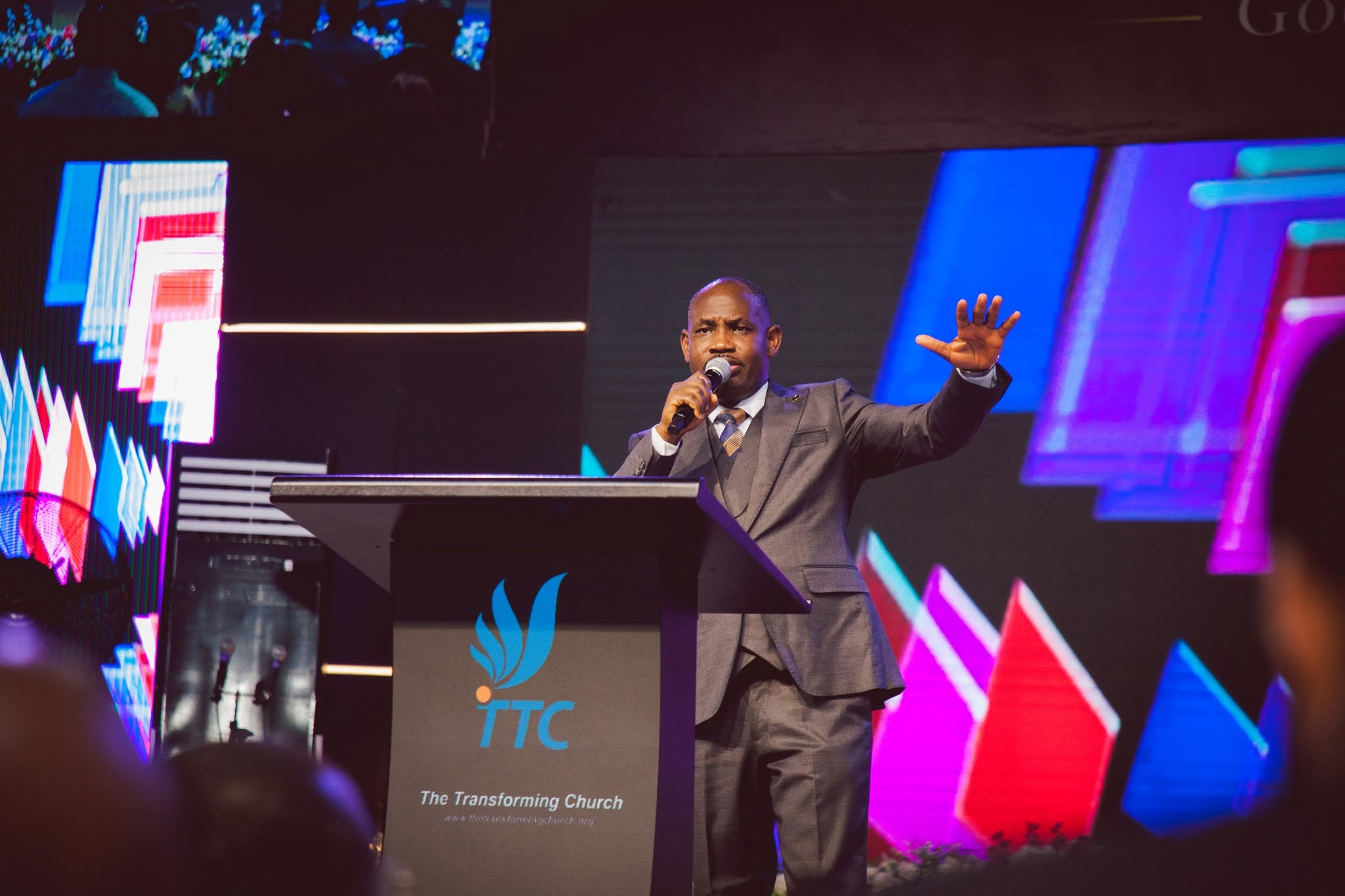
Minister: Pst. Sunday Adebamiro
Text: Mathew 6: 28–33 (NKJV)
Topic: SUPERNATURAL SUPPLY THROUGH KINGDOM PRINCIPLES
“So why do you worry about clothing? Consider the lilies of the field, how they grow: they neither toil nor spin; 29 and yet I say to you that even Solomon in all his glory was not [a]arrayed like one of these. 30 Now if God so clothes the grass of the field, which today is, and tomorrow is thrown into the oven, will He not much more clothe you, O you of little faith? 31 “Therefore do not worry, saying, ‘What shall we eat?’ or ‘What shall we drink?’ or ‘What shall we wear?’ 32 For after all these things the Gentiles seek. For your heavenly Father knows that you need all these things. 33 But seek first the kingdom of God and His righteousness, and all these things shall be added to you.”
We are building on last week’s foundation on Supernatural Provision and Supply Through the Help of God. As a church, we are in a season of supernatural provision and supply by God’s help.
Finance is one area that often concerns believers but is rarely openly discussed. Yet money matters because much of life is spent working to meet needs and build stability. It is not unspiritual to understand what God says about financial supply. This message focuses on supernatural supply through kingdom principles. God’s way of prospering His people is different from the world’s systems. Scripture affirms that “the blessing of the Lord, it maketh rich, and he addeth no sorrow with it,” showing that prosperity outside God’s order carries consequences.
True prosperity is not only financial. Many have money but lack peace, health, purpose, or fulfillment. Without God’s principles, people are easily drawn to flawed models of success. The Church must therefore teach kingdom prosperity clearly.
God is the source of all true wealth. Human effort alone is not enough, for except the Lord builds, labor is in vain. Many work hard yet see little fruit, showing the need for God’s involvement in prosperity. God also gives according to His sovereign will. In 1 Kings 3:12–14, He gave Solomon wisdom, riches, and honor beyond what he asked for, showing His ability to bless abundantly. Yet kingdom wealth still operates by divine principles.
PRINCIPLES OF KINGDOM WEALTH
God looks for hearts that are not attached to material things. When He can trust that His resources will not become idols, He releases more. A true steward holds everything loosely and remains willing to release whatever God requires.
He also distinguishes between seed and bread. Bread meets personal needs, while seed is for kingdom investment. The danger is consuming everything and sowing nothing. 2 Corinthians 9:10 shows that God gives seed to the Sower and bread for food. Bread is eaten, but seed is multiplied. God multiplies what is sown, so believers must intentionally invest in advancing His kingdom.
Ultimately, kingdom prosperity begins in the mind before it appears in life. What is seen by faith can be received by God’s provision.
Generosity is not merely a good habit; it is a kingdom law. Scripture further establishes this principle in Genesis 8:22: “While the earth remaineth, seedtime and harvest, and cold and heat, and summer and winter, and day and night shall not cease.” As long as the earth remains, the law of seedtime and harvest remains active. Increase follows sowing.
Under this law are several covenant practices through which believers participate in God’s system of supernatural supply.
The first covenant practice is percentile giving, commonly known as tithing. This principle teaches that a believer returns a percentage of what God has provided back to Him in acknowledgment that He is the true source of every blessing. Tithing did not originate with the Mosaic Law. It was practiced centuries before the law was given. In Genesis 14:18–20, After Abram’s victory over several kings, Melchizedek, priest of God Most High, blessed him and acknowledged that God had delivered his enemies into his hand. In response, Abram gave him a tenth of everything.
Abraham’s tithe was an act of recognition. He understood that his success was not the product of personal strength alone but the result of divine intervention. Likewise, every blessing received from God presents an opportunity to acknowledge Him as the source. Jacob also practiced this principle long before the law. However, when later generations abandoned it, God addressed the issue through Malachi 3:8–10, where He challenged His people concerning tithes and offerings and invited them to prove Him.
Some argue that tithing is absent from the New Testament, yet Jesus addressed it directly in Matthew 23:23. While rebuking the Pharisees for neglecting justice, mercy, and faith, He affirmed that they should tithe without neglecting these more important matters. The issue was never tithing itself but practicing it without genuine righteousness. Under grace, believers recognize that everything belongs to God. Tithing therefore becomes not merely a legal obligation but a practical acknowledgment of God’s ownership and faithfulness.
There is often intense resistance whenever the subject of tithing is raised because money has a spiritual rival. Jesus identified this rival as Mammon. Every believer must decide whether their finances will be governed by God’s principles or by the spirit of Mammon. The enemy also resists tithing because of the covenant benefits attached to it. God promises to open the windows of heaven, releasing divine insight, revelation, and opportunities. He also promises empowerment for wealth creation and supernatural preservation through the rebuke of the devourer. Obedience positions believers to enjoy God’s protection over the works of their hands and the fruit of their labor.
The second covenant practice is offering. It is an act of worship presented to God in honor and gratitude. Deuteronomy 16:16 instructs God’s people not to appear before Him empty-handed.
An acceptable offering must be honorable and proportionate to God’s blessings upon one’s life. Jesus commended the widow who gave sacrificially, showing that God values the heart and sacrifice behind the gift. While the tithe acknowledges God’s ownership, the offering becomes a channel for increase. Scripture teaches that those who sow sparingly reap sparingly, while those who sow generously reap generously.
The third covenant practice is seed faith. It is an offering given with a specific expectation before God. Scripture shows the power of sacrifice in producing spiritual outcomes. In 2 Kings 3:27, a king’s sacrifice altered the course of a battle, while in 2 Samuel 24:25, David’s sacrifice brought an end to a devastating plague.
Seed faith is giving with focused expectation, trusting God for intervention in a specific area of life, whether in employment, family, finances, or any area requiring divine help.
The fourth covenant practice is prophetic offering. It is a seed given in honor of the spiritual authority God has placed over your life. Matthew 10:41 says, “He that receiveth a prophet in the name of a prophet shall receive a prophet’s reward.”
A clear example is Elijah and the widow of Zarephath. In the midst of a severe famine, the widow obeyed the prophet’s instruction and served him first from her last meal. As a result, supernatural provision was released into her household; her flour did not run out, and her oil did not fail throughout the famine. The lesson is that honor, obedience, and generosity position believers to access divine provision and uncommon breakthroughs.
EARTHLY CHANNELS FOR WEALTH FLOW
The principles discussed thus far are the spiritual channels through which God releases the grace and empowerment for prosperity. However, wealth must flow through legitimate earthly channels. God gives wisdom, favor, opportunities, ideas, and the power to create wealth, but these must find expression through practical avenues. No matter how great the anointing, there must be a channel through which wealth can flow.
There are four major earthly channels through which wealth flows:
These earthly channels do not replace dependence on God; rather, they provide practical pathways through which His blessings can flow.
CALL FOR REPENTANCE
Before anyone can participate in kingdom prosperity, they must first belong to the Kingdom. If you have not surrendered your life to Jesus Christ, do so today and receive His forgiveness and salvation. Pray this prayer sincerely:
“Lord Jesus, I thank You for dying for me. Today, I surrender my life to You. Forgive me of all my sins, wash me clean, and become the Lord of my life. I place my trust in You and receive You as my Savior. In Jesus’ name, Amen.”
PRAYER AND PROPHETIC DECLARATIONS
I pray for you today: May every season of lack and struggle come to an end. May God release wisdom, favor, opportunities, and supernatural supply into every area of your life. May the work of your hands prosper, and may you experience God’s provision as you walk in His kingdom principles. In Jesus’ name, Amen.
